

The manufacturing process of garden aluminum alloy guardrails usually includes the following main steps, combining material selection, precision processing and surface treatment, etc., to ensure their beauty, durability and anti-corrosion performance:
1. Raw material preparation for garden aluminum alloy guardrails
Aluminum alloy profiles: Usually, 6063 or 6061 series aluminum alloys are used. These alloys have good plasticity, corrosion resistance and strength.
Auxiliary materials: such as stainless steel screws, connectors, sealants, etc.
2. Profile extrusion forming for garden aluminum alloy guardrails
Heat the aluminum alloy ingot to approximately 500°C and press it into the required cross-sectional shape (such as columns, crossbars, grids, etc.) through a die in an extruder.
The extruded profiles undergo solution treatment through air cooling or water cooling, followed by natural aging or artificial aging to enhance their strength.
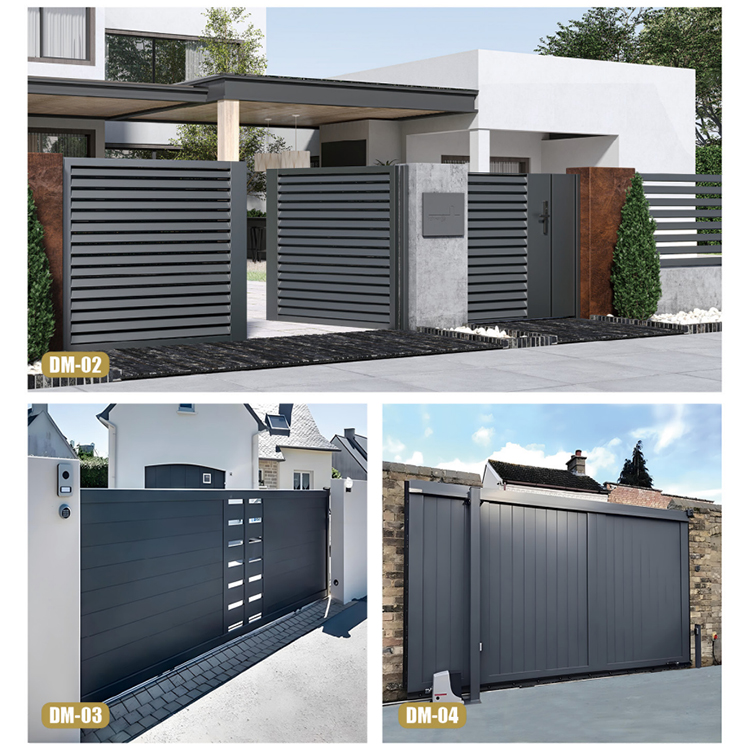
3. Mechanical processing for garden aluminum alloy guardrails
Cutting: Precisely cut the profiles according to their lengths based on the design drawings.
Drilling/slotting: Reserving holes or slots for installing connectors, screws or embedding glass and other accessories.
Arc bending treatment (if necessary) : Use a dedicated pipe bender to bend the profile, which is suitable for arc-shaped guardrail design.
4. Welding or assembly for garden aluminum alloy guardrails
Aluminum alloys are generally not welded by traditional electric welding because they are prone to oxidation and their strength is affected. Common connection methods include:
Mechanical connection: Use bolts, screws, clips, etc.
Aluminum welding (TIG/MIG) : It is used in areas with high strength requirements and requires professional equipment and shielding gas.
Interlocking assembly: Utilizing the inherent structure of the profiles to achieve screw-free splicing.
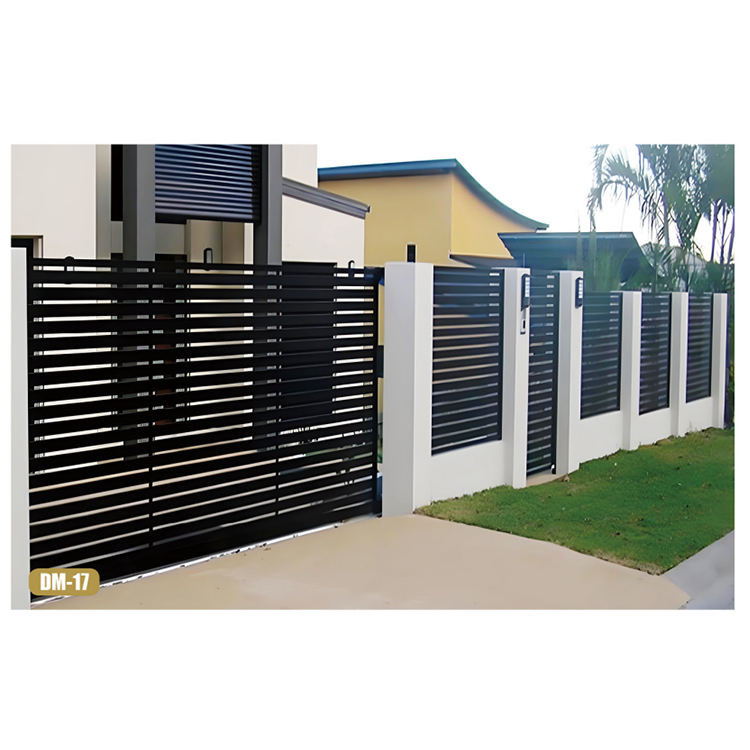
5. Surface treatment for garden aluminum alloy guardrails
This is a key step to enhance aesthetics and durability. Common methods include:
Anodizing: It forms a dense oxide film, enhancing corrosion resistance and wear resistance, and can be colored (such as antique copper, black, etc.).
Powder coating: Electrostatic spraying of environmentally friendly powder coatings, followed by high-temperature curing, offers rich colors and strong adhesion.
Electrophoretic coating: Uniform coating with high gloss, often used for high-end products.
Wood grain transfer: On the basis of spraying, a film is applied and heated to simulate the texture of real wood and enhance the decorative effect.
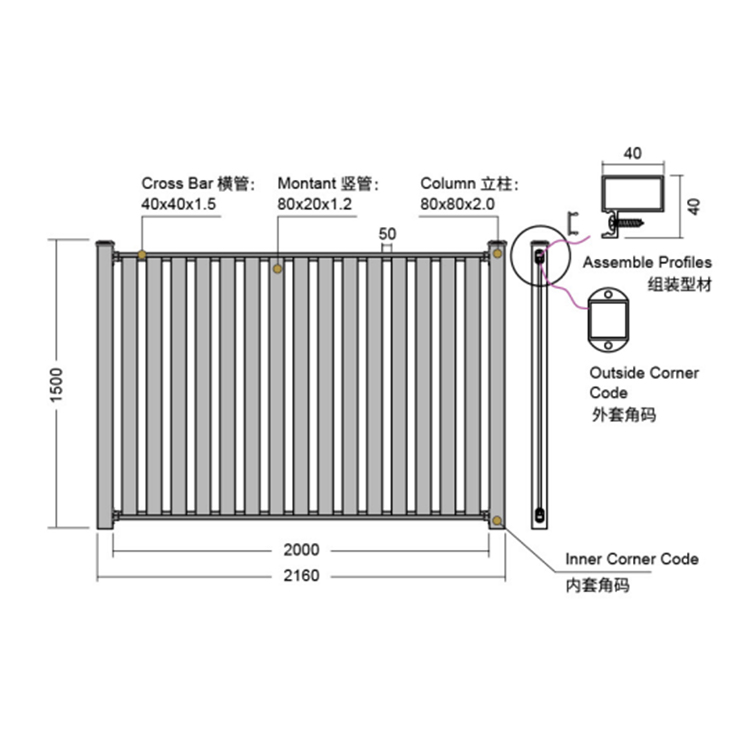
6. Quality Inspection and packaging for garden aluminum alloy guardrails
Conduct dimensional, strength, coating thickness and appearance inspections on the finished products.
Qualified products will be packed in scratch-resistant packaging and dispatched according to orders.
Summary of Advantages
Lightweight and high strength: Lighter than wrought iron, but with sufficient strength.
Maintenance-free: Does not rust and does not require regular painting.
Environmentally friendly and recyclable: Aluminum alloy can be 100% recycled and reused.
Flexible design: It can achieve various styles such as modern simplicity, European carvings, and Chinese grilles.
If you have specific application scenarios (such as waterside, high-rise balconies, child safety, etc.), you can also customize reinforced structures or special protective designs.